
The Inventory page lists every tracked part with how many you have, what they're worth and which ones need reordering. Open it from Inventory in the sidebar (it appears once inventory tracking is on).
Who can use it: owners, admins and dispatchers.
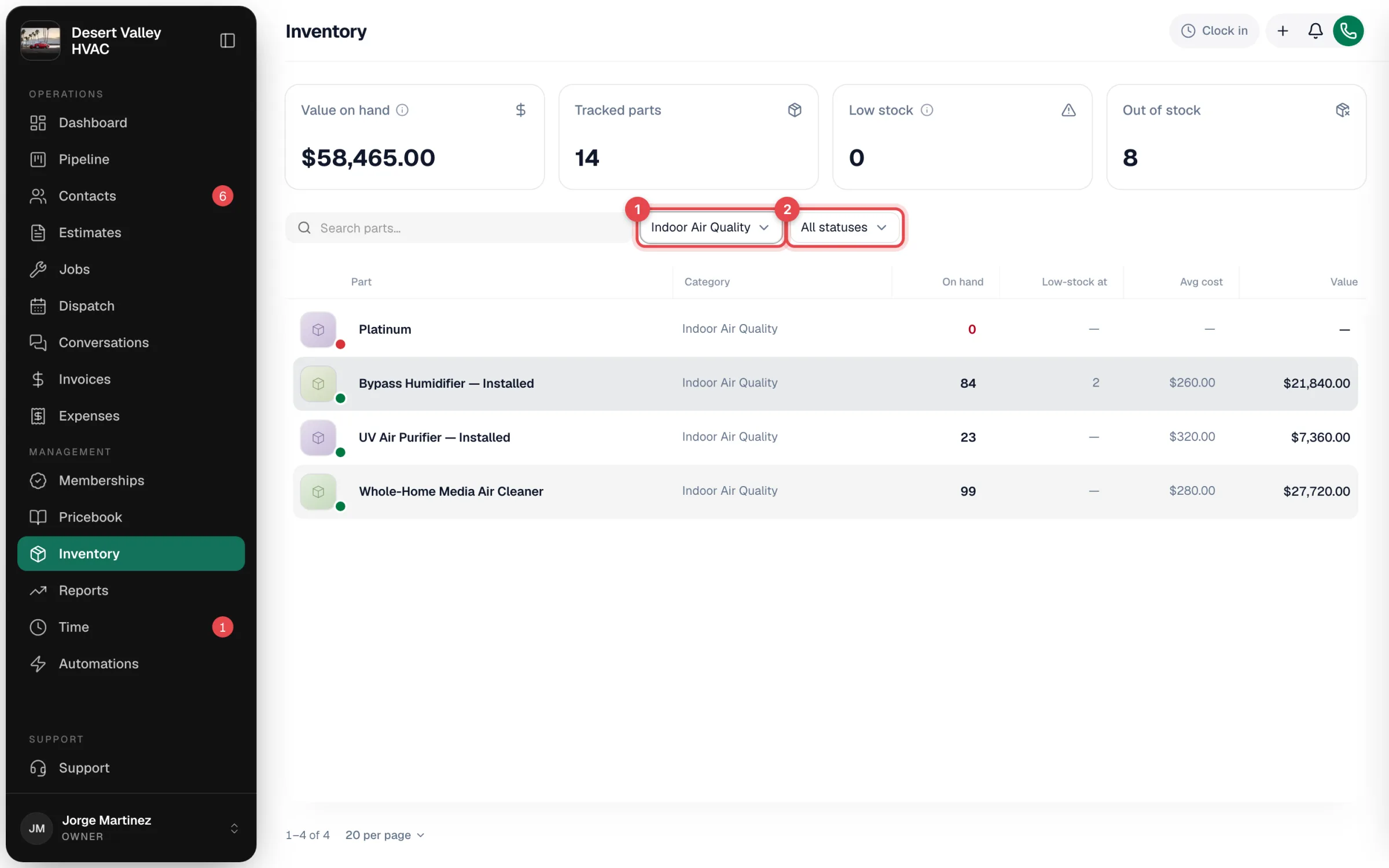
Summary cards
| Card | What it shows |
|---|---|
| Value on hand | On hand × average cost, added up across every tracked part (parts at zero or below add nothing). |
| Tracked parts | How many parts are tracked. |
| Low stock | Parts at or below their low-stock level but not yet out. |
| Out of stock | Parts at zero or below. |
The cards always cover all tracked parts; search and filters only narrow the table.
Search and filters
- Search parts…: type part of a name.
- All categories: show one pricebook category, or Uncategorized.
- All statuses: Out of stock, Low stock (incl. out) or In stock.
The parts table
Out-of-stock parts are listed first, then low-stock parts, then everything else, each group A to Z. Twenty rows show per page; change it at the bottom.
| Column | Content |
|---|---|
| Part | Photo, name and a colored dot: green in stock, amber low, red out. |
| Category | The pricebook category. |
| On hand | Current count, in amber or red when low or out. |
| Low-stock at | The part's warning level, or a dash if none is set. |
| Avg cost | Weighted average cost per unit. |
| Value | On hand × average cost. |
The part panel
Click a row to open the part's panel on the right.
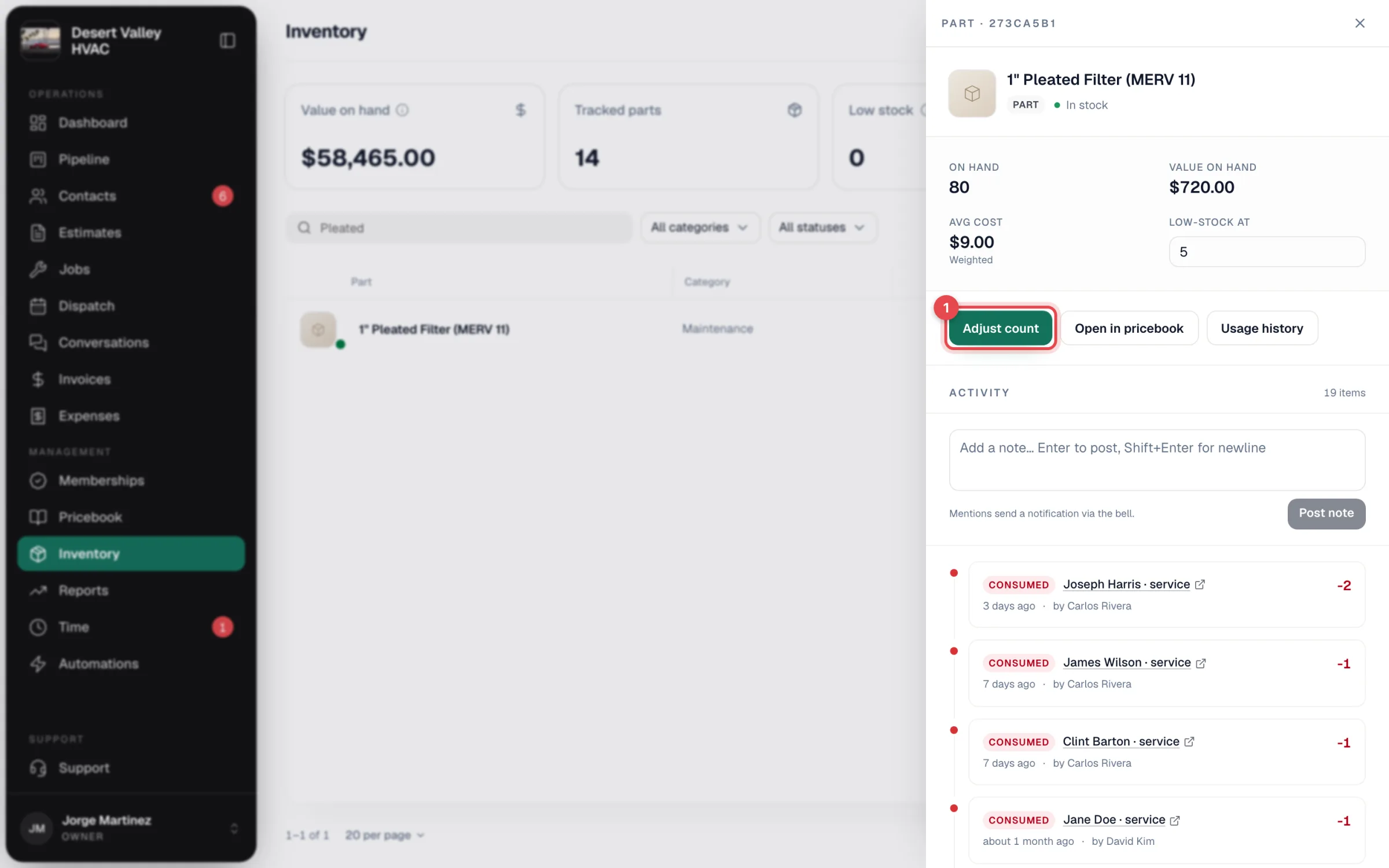
| Section | What you can do |
|---|---|
| On hand, Value on hand, Avg cost | See the part's numbers. |
| Low-stock at | Type a new warning level; it saves when you leave the field. See Stock status and reorder points. |
| Adjust count | Correct the count. See Making a manual stock adjustment. |
| Open in pricebook | Opens the item to edit its price, cost or photos. |
| Usage history | Opens a report of where this part was used (owners and admins, who can see reports). |
| Activity | Notes and every stock change, newest first. Consumed rows link to the job, Received rows to the purchase order, Adjusted rows show the reason and note. |
Notes on a part
Type in Add a note… and press Enter to post (Shift+Enter for a new line). @mention a teammate to notify them through the bell. Pin a note to keep it at the top.